



Concluded Projects
What is considered waste and scrap today can instead be reclaimed as a source of new materials and converted into sustainable fuels.
Nutrient recovery from ash
ERDF project 1043 "RFD"
Critical Raw Materials (CRMs) are strategic resources for the EU's industrial development — essential for the energy transition, electric mobility, technological innovation and security. Among them are metals such as copper, nickel and phosphorus, all indispensable for the production of batteries, electronic devices and fertilisers.
Yet securing these resources is becoming increasingly difficult. Europe relies heavily on a small number of non-EU countries, exposing supply chains to risks from geopolitical tensions, trade restrictions and growing global demand.
In this context, HBI is committed to reducing dependence on foreign resources through advanced recovery technologies. Through the ERDF 1043 – RFD research project, funded by the regional development funds of the Autonomous Province of Bolzano, we developed an innovative technology to extract metals and critical materials such as phosphorus from sewage sludge ash. This solution is fully aligned with European directives aimed at boosting recycling, promoting the circular economy and valorising high-value secondary materials.
Project objectives
- Recover critical metals from the solid residues of sludge treatment processes.
- Reduce dependence on imports of raw materials.
- Promote a more resilient, sustainable and self-sufficient supply chain for the environmental and energy sector.


Total Project Costs
449.982,96
EU Public Contribution
329.067,25
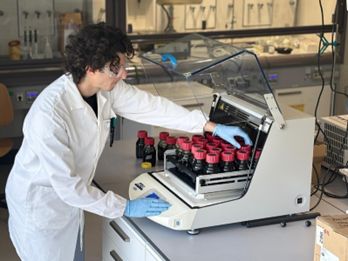
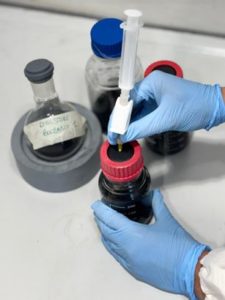
The potential of HTC liquid for biogas production ERDF project 1104 "HB Ponics"
HB Ponics was an applied research project focused on the integration of hydrothermal carbonisation (HTC) and anaerobic digestion. The goal was to valorise digestate — a by-product often disposed of as waste — by transforming it through the HTC process into two valuable resources: a carbon-rich solid (hydrochar) suitable as a substrate for hydroponic systems, and a nutrient-rich liquid for use in fertigation.
Key results:
- The potential of HTC liquid as a substrate in anaerobic digestion to boost biogas production was confirmed, with scenario analyses validating its economic viability.
- Experimental tests on sludge digestate from the Bolzano treatment plant provided data on the biomethane potential of HTC liquid, offering concrete support for the recirculation scenario.
- Process modelling identified the heat exchanger as the most critical component in terms of costs, energy consumption and CO2 emissions, pointing to the priorities for future optimisation.
Total Project Costs
488.981,50
EU Public Contribution
434.200,50
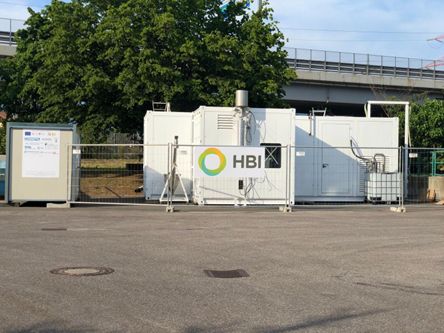
First pilot plant combining HTC and gasification for sludge valorisation — Province of Bolzano L.14 project "W-BBI"
The W-BBI project aimed to develop and demonstrate, at TRL 6, an integrated system based on hydrothermal carbonisation (HTC) and gasification for the treatment of sewage sludge and the production of renewable energy.
Throughout the project, research, development and engineering activities were carried out to optimise the existing HTC prototype and build a new gasification unit. The two technologies were integrated into a single demonstration system installed at the Bolzano wastewater treatment plant, enabling pilot-scale testing of the full process.
Activities also included FMEA analysis of critical components, the design of a process parameter monitoring and control system tailored to sludge characteristics, and the characterisation of process streams — in particular the HTC liquid and gasification ash — with the aim of identifying viable valorisation pathways.
The project successfully validated the integrated HTC and gasification system, demonstrating the effectiveness of the technological solutions developed and the patents filed by HBI. The results obtained laid a critical foundation for the subsequent industrial development of the technology, paving the way for the transformation of wastewater treatment plants into bio-based platforms capable of generating renewable energy and materials — in line with the principles of circular economy and energy transition.